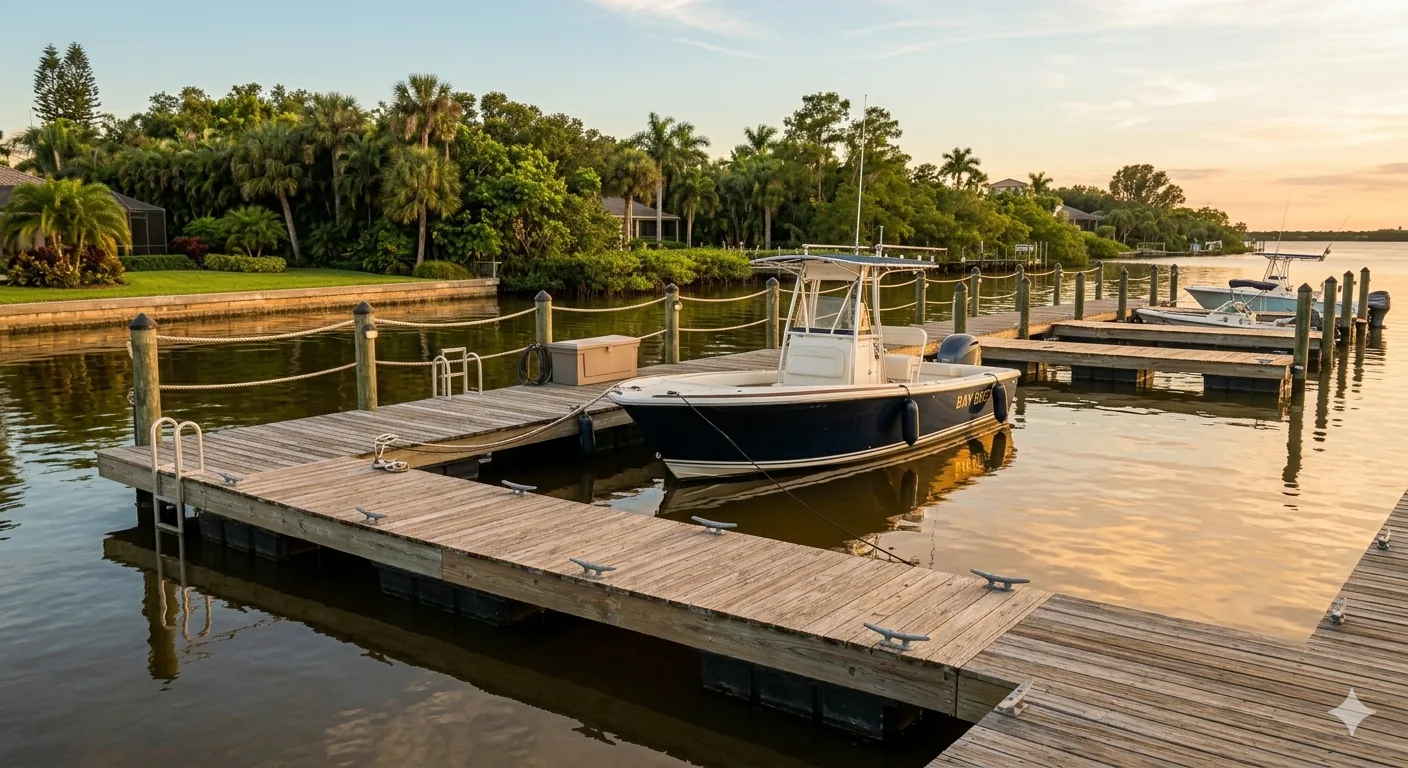
Pick a boat lift rated for at least your boat's real loaded weight plus a 20 to 25 percent margin. To get the loaded weight, start with the manufacturer's dry weight, add the engine if it is not included, add fuel at about 6 pounds per gallon for gasoline (roughly 7 for diesel), then add batteries, gear and anything else that lives aboard. Round up to the next standard lift size. Then check beam width, water depth at low tide and pilings before you buy.
Step 1: Find the True Weight
The brochure dry weight is the starting point, not the answer. Check whether it includes the outboard; many hull weights do not, and a pair of large outboards adds a lot. Then add:
- Fuel: tank capacity in gallons times about 6 pounds for gasoline. A 100-gallon tank is about 600 pounds when full.
- Water and livewells: freshwater tanks and any water that stays in a livewell or bilge.
- Batteries, T-top, electronics, anchor and chain, coolers, tackle, safety gear. ShoreMaster's shorthand is to add about 500 pounds for all of this on a typical boat; heavily rigged fishing boats can carry more.
Lift makers also warn that real-world weight usually runs higher than the spec sheet. If you can weigh the boat on its trailer at a truck scale, do it.
Step 2: Add a Safety Margin
Lift manufacturers suggest adding 20 to 25 percent to the total. The margin covers rainwater left in the boat after a summer storm, gear you add later and the extra stress when the boat comes up out of chop.
Example: a boat with a 3,500-pound dry weight including the engine, a 70-gallon tank (about 420 pounds) and 500 pounds of gear weighs about 4,420 pounds loaded. Add 20 percent and you get about 5,300 pounds, so you would choose the next lift size above that, not one rated right at 5,000.
Step 3: Check Fit, Not Just Weight
- Beam: the boat's widest point has to fit between the lift's pilings or guide posts with room to spare when there is a crosswind.
- Bunks or cradle: they should support the hull where the builder intends, especially on deep-V and catamaran hulls.
- Water depth at low tide: the lift has to lower the boat far enough to float off at a low tide, not just at high water. Tampa Bay's tides, plus the extra-low water that strong winds can push out of the bay, can leave a shallow slip nearly dry.
- Height at high water: the boat needs to clear the water at the highest tides you expect, with margin for storm surge planning.
Step 4: Make Sure the Pilings Can Carry It
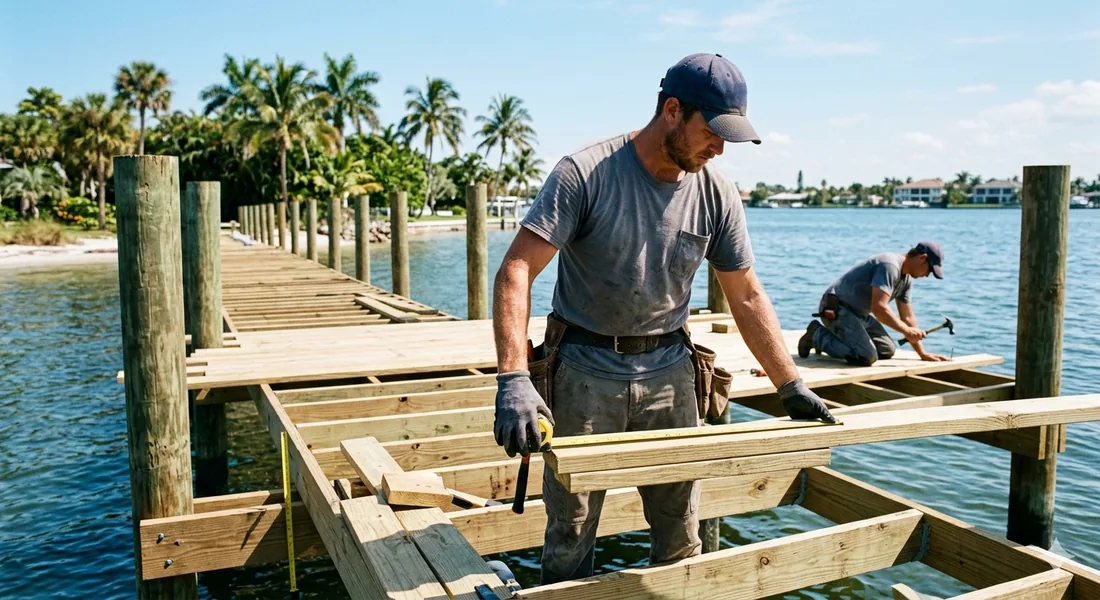
A lift is only as strong as what it hangs from. A four-post lift sits on its own pilings; an elevator lift mounts to the seawall or dock structure. Either way, the pilings or wall have to be rated for the load. When we add a lift to an existing dock, we check pilings for age and borer damage first, because putting a heavier boat on tired pilings is a common way docks fail. More on that in why dock pilings fail in Tampa Bay.
Step 5: Permits and Setbacks
In St. Petersburg, boat lifts and tie poles must sit at least 10 feet from your side property lines (5 feet on very narrow lots), and a dock can be set up for no more than two boats in total. New lifts are also part of Pinellas County's Water and Navigation review, and a building permit is often needed for the lift and its wiring. See our St. Petersburg dock permit guide for the full list.
Buying for the Next Boat
Most owners trade up eventually. If you are on the line between two sizes, the larger lift usually costs less than replacing a lift in a few years. Just confirm the bigger boat will still fit your slip, setbacks and water depth.
Our boat lift installation team sizes lifts to the boat you actually own and checks the dock and pilings it will hang from. We install across St. Petersburg, Gulfport and nearby waterfront neighborhoods.