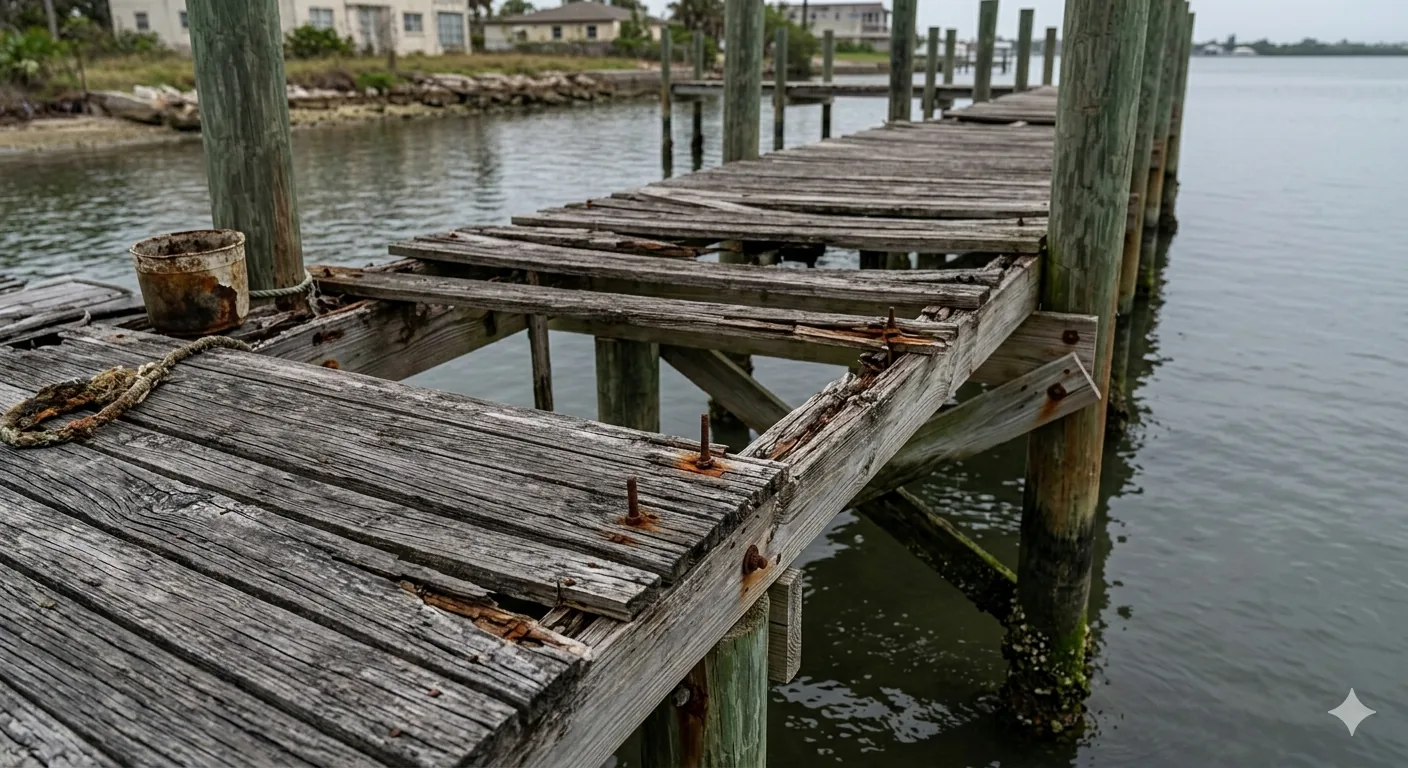
Most wood dock pilings in Tampa Bay fail because of marine borers, small animals that tunnel into wood in salt and brackish water, along with ordinary rot above the waterline. Florida Sea Grant notes that Florida water never gets cold enough to stop them, so they work all year. Pilings last longest when they are treated to the marine rating for Gulf waters, protected where the borers attack, and inspected before they look bad.
What Is Eating the Pilings
Florida Sea Grant's bulletin on wood-boring animals in Florida names three groups as the biggest threats to wooden structures:
- Shipworms: clams, not worms, that bore long tunnels through the inside of a piling. The outside can look nearly intact while the core is hollow.
- Isopods: tiny crustaceans, including the gribble (Limnoria) and the pillbug-like Sphaeroma, that chew the surface and leave pilings with a pinched, hourglass shape.
- Pholads: boring clams that drill their own chambers into the wood.
The same bulletin points out two uncomfortable facts: Limnoria tolerates standard creosote treatment well, and Sphaeroma is notably tolerant of chromated copper arsenate (CCA). Treatment alone is not a guarantee.
The Treatment Rating Pilings Need
Wood preservation standards split salt-water use into three zones. For the Gulf Coast and waters south of Georgia, pilings fall into Use Category UC5C, which calls for a heavy CCA retention of 2.5 pounds per cubic foot. That is far more preservative than the ground-contact lumber used for a backyard deck. When we build or repair a dock, pilings in the water get the marine rating, and the frame above gets ground-contact or better.
Ask any contractor what treatment and retention their pilings carry. If the answer is the same lumber used for a fence post, expect a much shorter life.
Do Piling Wraps Work?
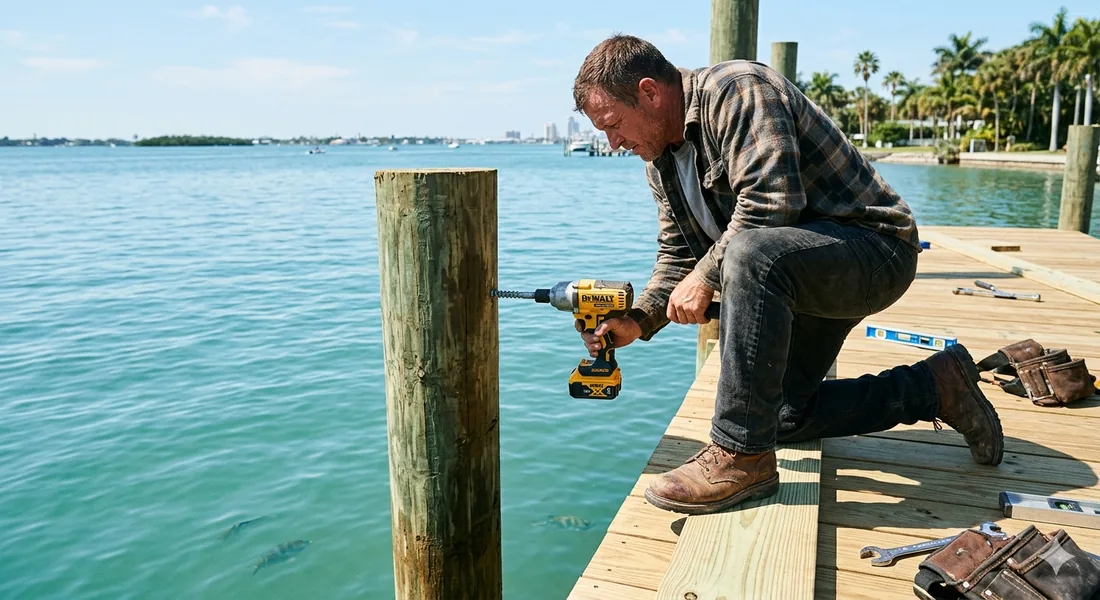
Piling wraps are plastic sleeves wrapped tightly around a piling, typically from below the mud line to above high water. The idea is simple: borers need fresh seawater for oxygen, so a sealed wrap traps stagnant water against the wood and starves anything inside. They can add years to sound pilings and slow damage on ones already under light attack.
The catch is the seal. Wraps that are loose at the top or bottom let seawater circulate and do little. When we wrap pilings, the wrap goes on clean wood, extends into the bottom and is sealed and strapped at both ends. Wraps do not fix a piling that has already lost much of its cross-section; that one needs replacing.
Warning Signs of a Failing Piling
- The dock moves or shudders when someone walks on it or a wake comes through.
- A piling leans, or there is a gap between the piling and the framing it supports.
- The piling is visibly thinner near the waterline or mud line.
- Small round holes, soft spots or wood that crumbles when probed with a screwdriver.
- Boards and stringers sagging between pilings.
Because so much of the damage is underwater or inside the wood, a proper inspection means probing and tapping every piling, and on bigger docks, looking below the waterline at low tide.
Replacing Pilings in St. Petersburg
St. Petersburg's dock code lets you replace pilings in exactly the same location without a new dock permit, which keeps many repairs simple. Moving pilings or changing the dock's shape brings back the full review described in our dock permit guide.
If your dock wobbles or a piling looks thin, our dock repair crews can inspect it and tell you what can be saved. Planning a lift? Piling condition is step one in sizing a boat lift. For a full rebuild, see dock construction. We work from Tierra Verde to Shore Acres.