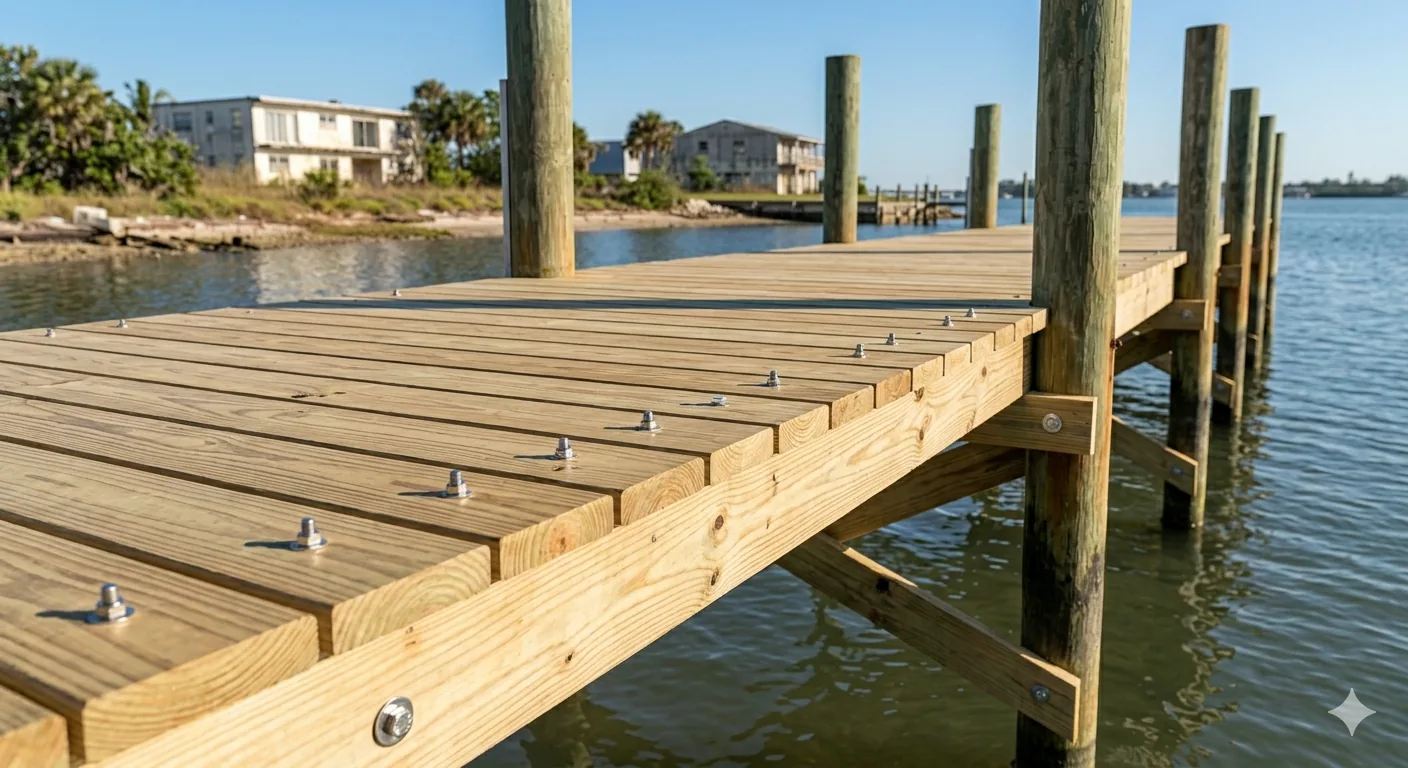
Yes. Building a new dock, adding a boat lift or changing the size of an existing dock in St. Petersburg needs a permit before work starts. Inside city limits the dock has to meet the city's dock code, and the project also goes through Pinellas County's Water and Navigation section, which reviews docks, lifts and seawalls in St. Petersburg and the other Pinellas cities. A handful of small repairs, like new decking on a legally permitted dock, are exempt.
Two Reviews: City and County
Pinellas County reviews waterfront work across the county, including inside cities, for its effect on navigation, water flow, erosion, wildlife, seagrass and neighboring property. Since July 1, 2024 those applications go through the county's online Access Portal. The county page is clear that its review covers the water side of things only, and that you still need the city's approvals before building.
On the city side, St. Petersburg's dock rules live in Section 16.50.130 of the land development regulations. They decide where on your lot the dock can sit, how far into the canal it can reach and what you can put on it. Depending on the work, a separate building permit may also be required, which is common for boat lifts and electrical.
Some addresses people think of as St. Pete are actually separate cities or unincorporated county, with their own rules: Gulfport, South Pasadena, St. Pete Beach, Treasure Island and Tierra Verde among them. Neighborhoods like Snell Isle, Shore Acres and Pinellas Point are inside the city and follow the rules below.
Work That Does Not Need a Dock Permit
The city code lists three exceptions. You can, without a dock permit:
- Add handrails up to 3½ feet tall, measured from the deck surface.
- Replace decking on an existing, legally permitted dock, as long as the dock keeps or shrinks its permitted shape.
- Replace pilings in exactly the same spots.
Anything that adds area, moves pilings, adds a lift or changes the layout goes back through review. That is why re-decking jobs from our dock repair crews can usually start quickly, while a rebuild in a new shape cannot.
Side Setbacks
How close a dock can come to your neighbor depends on how much waterfront you have:
- 50 feet or more of frontage: every part of the dock stays at least 20 feet from the side lot lines.
- Between 20 and 50 feet: the dock has to fit within the middle third of the lot's width.
- 20 feet or less: a 5-foot side setback.
- Tie poles and boat lifts: at least 10 feet from the side lines, or 5 feet on lots with less than 20 feet of frontage.
How Big and How Far Out
The city does not set a fixed maximum length. Instead it limits reach and footprint:
- No part of the dock may extend more than 25 percent of the waterway's width. On a 100-foot canal, that is 25 feet.
- Total dock surface is capped at 4 square feet per foot of waterfront, with up to 50 feet of access walkway not counted.
- A dock may be built to hold no more than two boats, counting lifts and davits, with a narrow exception for a cradle holding two small motorized boats under 12 feet.
Roofs, Canopies and Boathouses
Roofs and canopies over a dock are not allowed on lots with less than 50 feet of waterfront, cannot sit in a side setback without a variance, and must stay low-pitched. Enclosed boathouses are prohibited. If shade matters, a lift canopy or a smaller covered area near the seawall may be the realistic option.
Seagrass, Mangroves and State Rules
Much of Tampa Bay's shoreline has seagrass or mangroves nearby, and the county keeps a Coastal Environmental Resource Zone map that flags those properties. Docks over seagrass are held to height and width limits that shape the whole design; we cover them in building a dock over seagrass.
Repairing an Older Dock
Docks permitted under older rules are generally grandfathered as long as they match their original permit. Problems come up when an old dock was enlarged without a permit, or when a rebuild changes its shape. Before quoting a new dock or major rebuild, we pull the permit history so there are no surprises at review.
The code language here is summarized from the current published version; the city can amend it, so we confirm the details for your address before drawing anything. If a lift is part of the plan, read what size boat lift you need, and for older docks, why pilings fail in Tampa Bay.