Docks Built For The Way You Actually Use The Water
Every great dock starts with a conversation about how you live on the water. A family that loads kids and coolers onto a pontoon every weekend needs something very different from an angler who wants a low-profile fishing platform, or a boater who needs deep-water access and a lift for a center console. Before we talk materials or money, we walk your shoreline, check your water depth at low tide, look at your seawall and your neighbors' structures, and learn what you want the dock to do. That conversation shapes everything that follows.
We've been building docks across St. Petersburg and the wider Tampa Bay area since 2012, and in that time we've learned that the docks that last are the ones that are designed for their exact spot — not pulled off a one-size-fits-all template. Tide range, prevailing wind, bottom composition, fetch across open water, and your home's setback from the water all change the right answer. We build for your conditions, not a generic average.
Wood Or Composite? We'll Help You Choose
The two most common decking choices we install are pressure-treated wood and composite. Pressure-treated pine and marine lumber are time-tested, budget-friendly, and easy to repair board-by-board down the road. Composite decking costs more up front but shrugs off salt, sun and rot, never needs sealing, and stays splinter-free for bare feet — a real advantage in our climate. Many of our clients choose a hybrid: composite on the walking surface where comfort and low maintenance matter most, with treated lumber for the substructure. We'll lay out the honest trade-offs in your written quote so you can decide with eyes open.
Whatever decking you choose, the bones of the dock matter more than the surface. We set proper pilings to the correct depth, use galvanized or stainless marine-grade fasteners and connectors throughout, and build framing that won't rack or sag when a storm pushes water up underneath it. Cutting corners on hardware is how a dock fails early — so we don't.
Designs & Features We Build
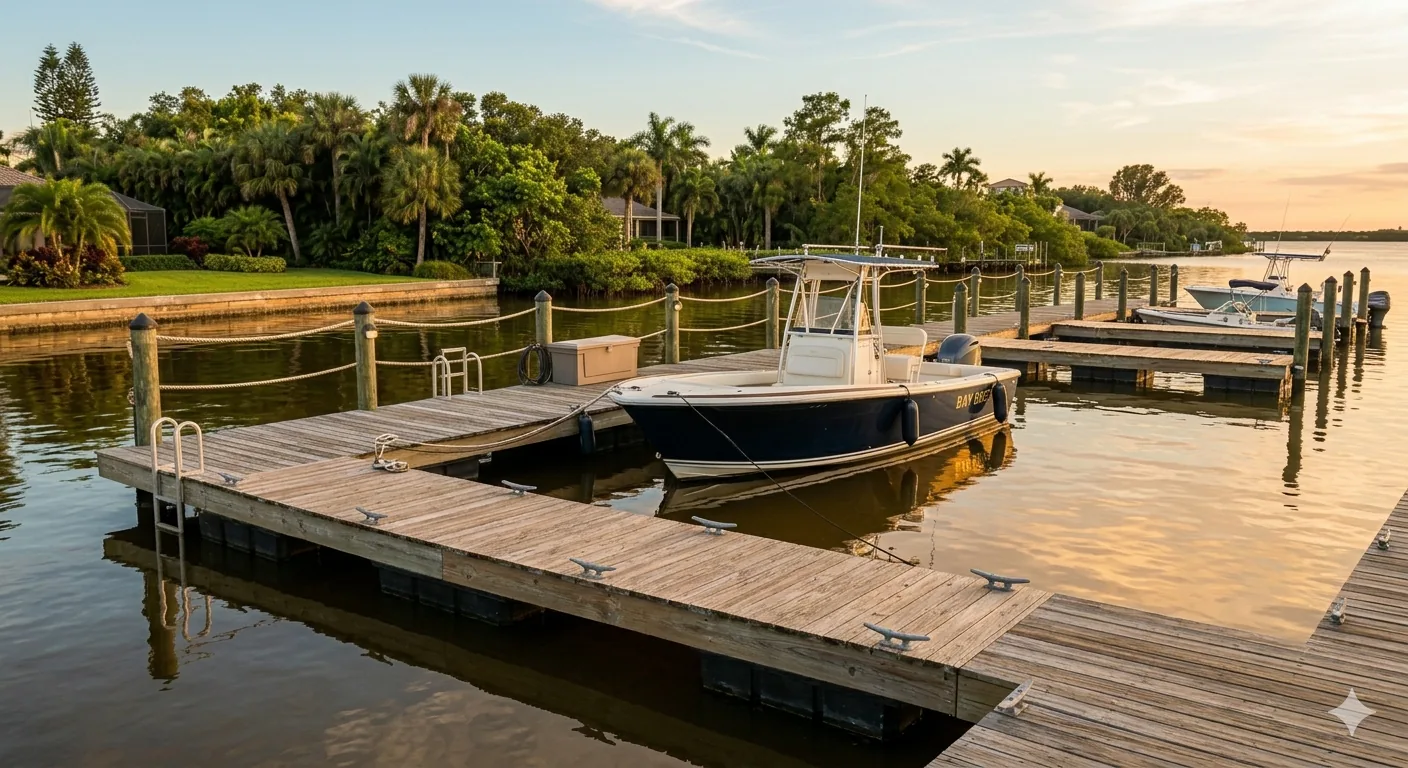
A dock can be a simple straight walkway to deep water, or it can be the centerpiece of your backyard. Depending on your goals and your permit envelope, we build and integrate:
- Straight, L-shaped and T-shaped docks sized to your shoreline and water depth
- Covered slips and roof structures for shade and boat protection
- Integrated boat lifts, jet ski lifts and floating PWC platforms
- Wider sundeck platforms for seating, fishing and entertaining
- Composite or wood decking with hidden fasteners for a clean surface
- Dock lighting, power, water lines, cleats, ladders and bumpers
We Handle The Permitting
Waterfront construction in Pinellas County means dealing with the City of St. Petersburg, the county, and in many cases state and environmental agencies. Setbacks, dock length limits, seagrass surveys and submerged-land considerations all come into play. This is exactly where a lot of homeowners get stuck. We've walked this path hundreds of times — we prepare the drawings, submit the applications, and shepherd your project through approval so it's built legally and passes inspection the first time.
What To Expect, Start To Finish
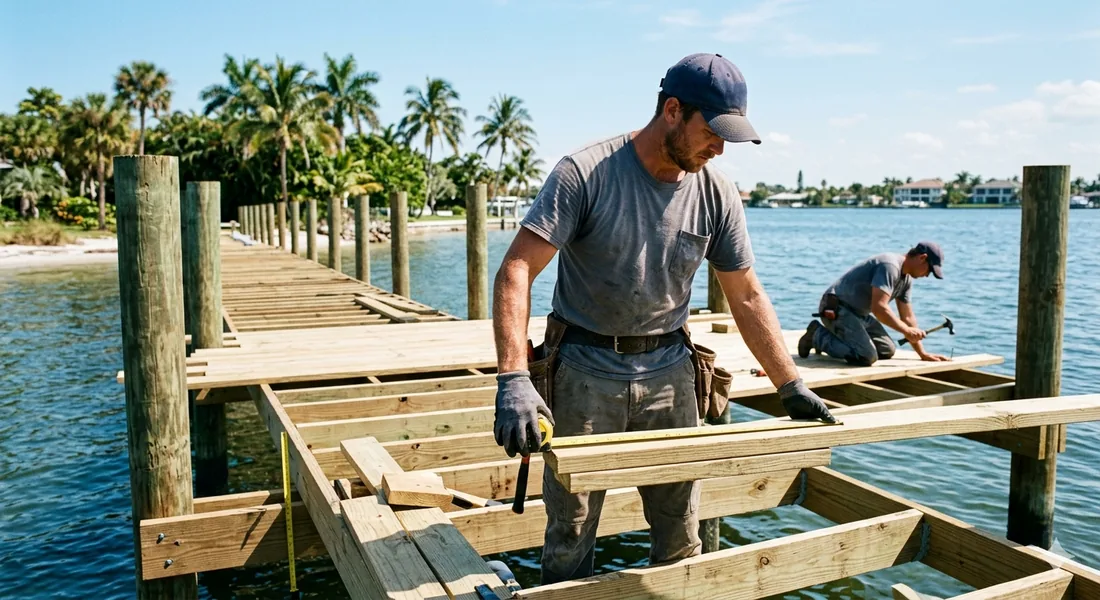
After your free on-site estimate, we deliver a written, itemized quote — no vague "we'll see" numbers. Once you approve it, we handle permitting, schedule the build, and keep you updated as we go. On build days our own crew does the work; we don't hand your project to rotating subcontractors who've never seen your shoreline. When we're done, we haul off old material, clean the site, and walk the finished dock with you so you know exactly what you're getting and how to care for it.
The result is a dock that fits your life, stands up to the bay, and adds real value to your waterfront home. If you're ready to talk through ideas — or you just want a ballpark number — call us at (813) 819-7464 or request a free quote online. We're happy to take a look at photos you text over and give you honest direction before anyone ever steps on your property.